What do you blame first when your energy bill unexpectedly jumps? It might be the weather, your thermostat setting, or rising electricity bills. But sometimes the culprit is hiding in a place you don’t often think about: your HVAC air filter.
Although a filter might look like a minor component of your heating and cooling system, when it becomes clogged with dust, pollen, and other particles, it can limit airflow and reduce efficiency. This can lead to longer run durations, reduced comfort, and higher energy usage.
So, do unclean air filters raise energy bills by 30%? Let’s see what the evidence shows, what warning signals to check for, and how regular maintenance can help.
Why a Clogged Filter Makes Your System Work Harder
Your furnace or air handler will pull air through a filter that will trap dust, pollen, pet hair, and other particles. The debris builds up and makes it harder for air to enter through the filter.
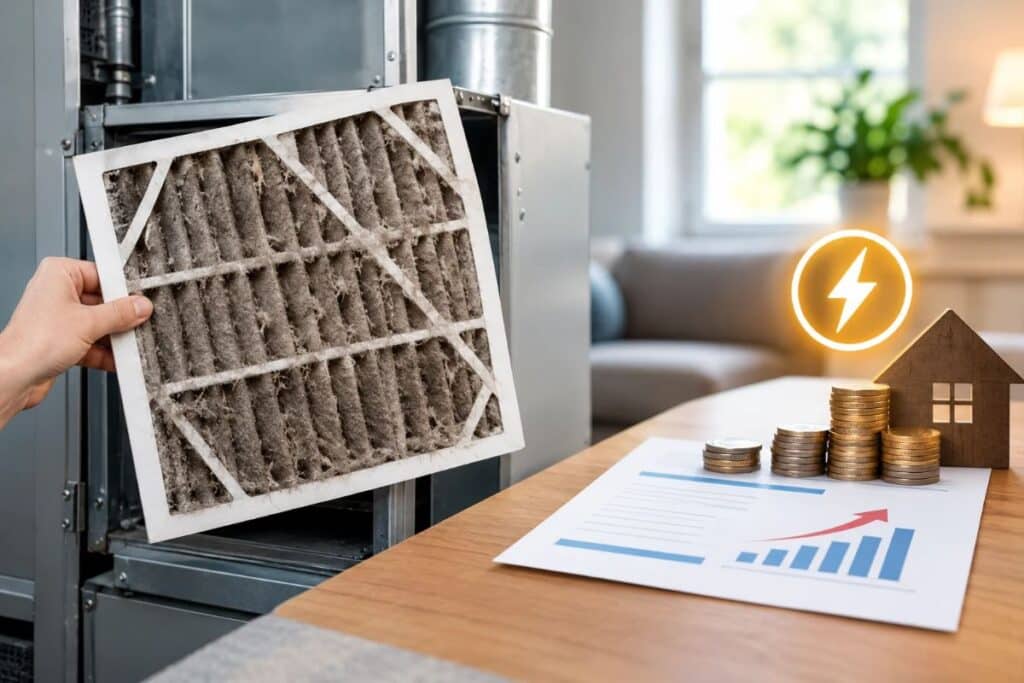
Dirty HVAC filters can restrict airflow, making it more difficult for your system to provide heating or cooling effectively. Depending on the equipment and conditions, this may result in longer run times and increased energy use.
The U.S. Department of Energy says changing a dirty air conditioner filter to a clean one can cut the unit’s energy use by roughly 5% to 15%. The actual result depends on the system, climate, and condition of the filter.
4 Ways Dirty Air Filters Can Increase Your Energy Bills
1. Restricted Airflow Makes Your System Work Harder
A filter catches dust and particles, which can limit the air circulating through your HVAC system. You may notice less air coming out of the vents, or it may take longer for rooms to achieve the temperature you chose.
Checking the filter is a simple first step before assuming your system needs a costly repair.
2. Longer Run Times Can Mean Higher Energy Costs
If ventilation is blocked, it may take longer for your system to heat or cool your home. That increased operational time might raise energy consumption, especially during times of strong heating or cooling.
Here’s one way filthy air filters might affect your monthly expenditures. If your system is running longer than normal, inspect the filter and other probable culprits such as harsh weather or thermostat settings.
3. A Dirty HVAC Filter Can Contribute to Equipment Problems
A severely clogged filter may contribute to problems such as frozen evaporator coils in cooling systems or overheating and safety shutoffs in some furnaces. The dangers depend on the equipment and the conditions of operation.
A damaged or poorly fitted filter can also allow dust to bypass the filter and reach internal components. Regular inspection helps you catch these issues before they lead to more serious maintenance needs.
4. Poor Airflow Can Make Your Home Less Comfortable
Why do certain rooms feel warmer or cooler than other rooms? One reason can be limited airflow. Room temperatures can also be affected by ductwork difficulties, insulation, and equipment performance.
Before you keep adjusting your thermostat, check the filter. If the temps are still inconsistent after replacement, you may need to have your system looked at further.
Does a Dirty Air Filter Really Increase Energy Bills by 30%?
A dirty filter can contribute to higher energy use, but a 30% increase in energy bills is not guaranteed.
The U.S. Department of Energy often states that replacing a dirty filter can cut air conditioner energy use by around 5% to 15%. This is the air conditioner’s energy usage, not necessarily your entire home’s electricity bill.
There are a number of factors that determine the actual savings you’ll see, including the condition of the filter, outdoor temperatures, the effectiveness of your HVAC system, how well your home is insulated, and how you adjust your thermostat.
The takeaway is simple: replacing a clogged filter can support efficient operation, but it works best alongside regular HVAC maintenance and good home insulation.
How Often Should You Actually Change It?
The right replacement schedule depends on your filter type, household conditions, and HVAC usage. Most ordinary filters need to be replaced every one to three months, while some of the thicker media filters can last longer. Always follow the recommendations of the equipment and filter manufacturers.
Check your filter monthly, especially if you have pets, a lot of dust, live near construction, or a system that runs a lot. Replace it sooner if it’s highly loaded with junk or if the manufacturer’s instructions recommend it.
How to Check and Replace Your HVAC Filter
Replacing an HVAC filter is usually a simple maintenance task. Follow these steps:
- Turn off the system before removing the filter.
- Locate the filter, usually near a return vent or inside the furnace or air handler.
- Check the size and rating printed on the filter’s frame.
- Inspect the old filter. Heavy dust buildup or matted debris may indicate it needs replacing.
- Insert the new filter with the airflow arrow pointing toward the blower.
- Check the fit to ensure there are no gaps around the edges.
- Turn the system back on and set a reminder to inspect the filter again.
Choosing the Right Filter Without Creating a New Problem
A higher MERV rating captures smaller particles, but it does not automatically mean better HVAC performance. Some high-rated filters can restrict airflow if your system is not designed to accommodate them.
Use the highest-rated filter your machine will handle based on the manufacturer’s specs. MERV 8 is fine for basic household filtration, and MERV 11 or MERV 13 can grab more tiny particles if compatible with the system.
Size and fit are important, too. If the filter is too small or does not fit properly, unfiltered air might pass around the filter and reduce its efficiency.
What About Commercial Buildings?
The resistance of filters can influence the energy required to push air through HVAC systems in commercial buildings. The effect depends on the equipment, kind of filter, airflow requirements, and maintenance procedures.
Facility managers can watch the filter pressure reduction or get warnings from building automation systems to know when to change filters. This allows them to base maintenance on actual conditions rather than just a fixed schedule.
Keep Your Energy Bills in Check with Air Filters Northwest
Keeping your air filter clean is an easy approach to help with optimal airflow and HVAC efficiency. Call Air Filters Northwest at (503) 968-3261 to help you choose the correct size and rating filter.
GREEN IS THE BOTTOM LINE® – proper filtering helps with indoor air quality, operating efficiency, and long-term equipment performance.
Frequently Asked Questions
Q: Can a dirty air filter really increase my energy bill?
A: Yes. A clogged filter restricts airflow and might lead to increased energy use. The Department of Energy estimates that changing a filthy filter may lower air conditioner energy use by 5 percent to 15 percent, though the results will vary.
Q: How often should I replace my furnace or AC filter?
A: Many common filters should be replaced every 1-3 months. Check monthly and per manufacturer guidelines, especially if you have pets, high dust, or frequent use of your HVAC system.
Q: Will a higher MERV filter save me energy?
A: Not always. A higher-rated filter will filter out smaller particles but can also restrict airflow if your system is not intended for it. Choose a filter that balances the needs of the filtering with the requirements of your equipment.
Q: What if I change the filter and my bill is still high?
A: Other factors can include leaking ducts, poor insulation, thermostat settings, or inefficient equipment. If you continue to have high expenses or ventilation issues, it could be worth having your HVAC system evaluated.